
Trump Teleprompter Operator Probed Over $100,000 Kalshi…
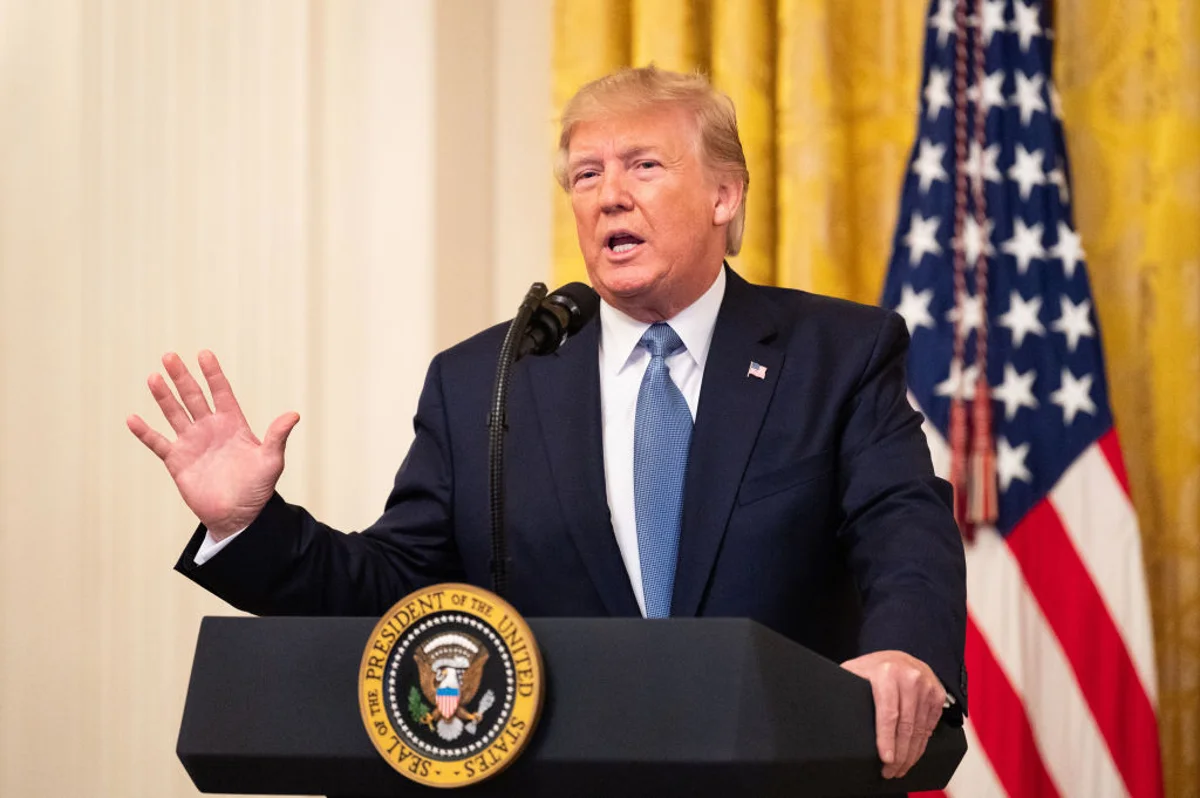 Federal regulators are investigating whether a longtime White House teleprompter operator used advance knowledge of President Donald Trump’s prepared remarks to make nearly $100,000 through prediction-market bets, according to reports from NPR and ABC News.
Gabriel Perez, who has operated Trump’s teleprompter since 2016 and currently serves as a deputy assistant to the president, is reportedly in settlement discussions with the Commodity Futures Trading Commission over trading on Kalshi’s presidential “mention markets.” These contracts allow users to bet on whether Trump will say specific words or phrases during speeches and other public appearances. ABC News separately reported that the alleged profits exceeded $100,000. :contentReference[oaicite:0]{index=0}
The case is particularly significant because Perez allegedly had access to the material that would appear on Trump’s teleprompter before the president spoke publicly. That information could provide a direct advantage in markets tied to whether particular words, subjects or expressions would appear in a speech.
Perez has been placed on unpaid administrative leave, according to White House Press Secretary Karoline Leavitt, who described the alleged conduct as “a disgrace.” He has not been charged with a crime, and the existence of settlement talks does not establish liability. Perez did not respond to requests for comment cited in the reports.
Federal regulators are investigating whether a longtime White House teleprompter operator used advance knowledge of President Donald Trump’s prepared remarks to make nearly $100,000 through prediction-market bets, according to reports from NPR and ABC News.
Gabriel Perez, who has operated Trump’s teleprompter since 2016 and currently serves as a deputy assistant to the president, is reportedly in settlement discussions with the Commodity Futures Trading Commission over trading on Kalshi’s presidential “mention markets.” These contracts allow users to bet on whether Trump will say specific words or phrases during speeches and other public appearances. ABC News separately reported that the alleged profits exceeded $100,000. :contentReference[oaicite:0]{index=0}
The case is particularly significant because Perez allegedly had access to the material that would appear on Trump’s teleprompter before the president spoke publicly. That information could provide a direct advantage in markets tied to whether particular words, subjects or expressions would appear in a speech.
Perez has been placed on unpaid administrative leave, according to White House Press Secretary Karoline Leavitt, who described the alleged conduct as “a disgrace.” He has not been charged with a crime, and the existence of settlement talks does not establish liability. Perez did not respond to requests for comment cited in the reports.
Kalshi Flagged Unusual Bets On Trump’s Words
The investigation reportedly began after Kalshi’s surveillance systems detected unusual activity in mention markets involving Trump. The trading did not resemble normal customer behaviour, and an examination of the account reportedly identified the trader as a federal employee with access to the president. Kalshi subsequently referred the matter to the CFTC, which regulates the exchange and its event contracts. Robert DeNault, Kalshi’s head of enforcement, said the company had provided regulators with the evidence gathered during its internal investigation.“Our surveillance team promptly flagged and referred these trades to the CFTC after an exchange investigation. We have been assisting regulators on this matter and provided evidence we collected, as we do in any referral.”One source cited by NPR said Kalshi froze approximately $90,000 in profits associated with Perez and banned him from trading on the platform. ABC News reported that he allegedly earned more than $100,000 through the activity. :contentReference[oaicite:1]{index=1} The CFTC has not publicly announced an enforcement action against Perez. It is also unclear whether the Department of Justice is conducting a criminal investigation.
How Trump “Mention Markets” Work
Mention markets are yes-or-no contracts tied to whether a public figure says a particular word, phrase or topic during a defined event. A contract paying out if Trump says “fake news,” for example, would settle at $1 if the phrase is used under the market’s rules and at zero if it is not. Contract prices move between zero and $1 and are interpreted as the market’s implied probability of the event occurring. Traders who believe a word is more likely to be mentioned can buy “yes” contracts, while those expecting it to be omitted can take the opposite side. Trump’s speeches are especially active markets because he frequently departs from prepared text and moves between topics. That unpredictability creates sharp changes in contract prices before and during appearances. Traders attempt to anticipate not only the prepared subject matter but also the tangents Trump may introduce while speaking. A person with access to the teleprompter script would not necessarily know everything the president would say, but could have a substantial advantage in determining which words and themes were included in the prepared remarks. That edge would be most valuable before the speech began and before the information was available to the broader market. Ahead of Trump’s address on Thursday, traders had reportedly placed more than $800,000 on whether he would use expressions including “Hormuz,” “rigged election” and “fake news.”Why The Alleged Trading Could Become A Federal Crime
Kalshi prohibits customers from using material non-public information to trade or manipulate markets. The allegation therefore raises questions extending beyond a violation of platform rules because the information at issue may have been obtained through Perez’s federal employment. Depending on the facts, prosecutors could examine whether the conduct involved wire fraud, commodities fraud, money laundering or the misuse of confidential government information. No such charges have been filed against Perez, and the precise legal theory being considered by the CFTC has not been disclosed. The case also differs from traditional stock-market insider trading. Perez is not accused of trading securities in a company whose financial results he knew in advance. The alleged informational advantage related directly to the event that would determine the settlement of a regulated prediction contract. This type of case could help define how federal authorities apply existing commodities and fraud laws to prediction markets. As these platforms expand beyond elections into politics, economics, corporate events and public statements, the number of people with potentially valuable non-public information also increases.White House Had Already Warned Staff Against Prediction-Market Trading
White House staff reportedly received a memorandum in March warning them not to use confidential government information to place bets on Kalshi or Polymarket. The memorandum said that buying or selling contracts based on non-public information could constitute a criminal offence and warned that misuse of government information would not be tolerated. Its reported distribution before the alleged conduct adds another element to the case because it suggests employees had received specific notice about the risks of prediction-market trading. Perez has worked with Trump since the 2016 presidential campaign. Government records cited by NPR show that he received an annual salary of $175,000 as a deputy assistant to the president. Trump has publicly praised Perez’s work. During a 2024 campaign rally in Reno, he described his teleprompter operator as “excellent” and compared having a good operator to “gold.”Prediction Markets Face A Growing Insider-Trading Problem
The Perez investigation follows several cases involving people accused of using privileged information to profit on prediction platforms. Federal prosecutors charged a US Army special forces soldier in April over allegations that he used classified information to make approximately $400,000 on Polymarket before the capture of Venezuelan leader Nicolás Maduro. A Google software engineer was charged the following month with allegedly using confidential company information to make $1.2 million from contracts linked to Google search trends. Former congressman George Santos has also reportedly faced scrutiny over trading connected to whether he would attend Trump’s 2026 State of the Union address. These cases expose a structural vulnerability in prediction markets. Event contracts are designed to reward traders who gather and interpret information more effectively than others, but the line between research and prohibited inside knowledge can become difficult to police when the subject of the market is a speech, government operation or internal corporate decision. Kalshi’s detection of the Perez trades may support the platform’s argument that regulated exchanges can identify and report suspicious behaviour. At the same time, the allegation demonstrates how employees positioned close to market-moving events may be tempted to trade on information that other participants cannot access.First Known White House Prediction-Market Insider Probe
The investigation appears to be the first publicly reported case involving a White House employee suspected of exploiting official access for prediction-market profits. Its outcome could extend beyond Perez. A public settlement or enforcement order may clarify how the CFTC expects government employees, campaign staff, speechwriters, technology operators and other insiders to approach event contracts connected to their work. For Kalshi and the broader prediction-market industry, the case presents both a regulatory test and a credibility challenge. The platforms are growing rapidly by turning political speeches, government actions and other news events into tradable contracts. Their long-term legitimacy will depend in part on whether ordinary traders believe those markets are protected from participants who already know the answer.

If you would like to delve into the world of investment topics , go to our partner project Wall Street Wizardry