
Qualcomm Shares Slide as Memory Inflation Squeezes Profit…
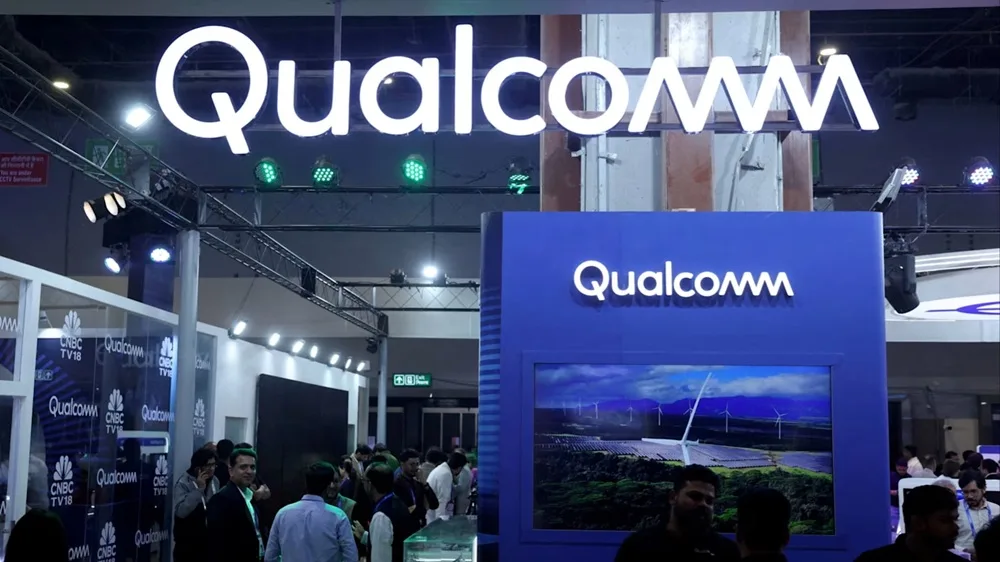 Qualcomm’s fiscal third-quarter revenue exceeded Wall Street’s forecast, but that was not the number investors traded. The damage came from the forward earnings guide and management’s explanation for it: memory inflation and broader component shortages are raising costs while pushing smartphone buyers toward cheaper premium devices and older models.
The initial reaction was severe. Qualcomm closed Wednesday at $155.57, down 4.49%, before falling 7.16% after hours to $144.53. The stock recovered part of that decline during Thursday’s session, finishing near $151.59, but the message behind the selloff remained intact. Revenue can hold up while the economics underneath it deteriorate.
That makes Qualcomm’s report more than a smartphone demand story. It is an early margin warning for the wider hardware chain, including AI-server builders that are competing for the same increasingly expensive memory, wafer, packaging and testing capacity.
Qualcomm’s fiscal third-quarter revenue exceeded Wall Street’s forecast, but that was not the number investors traded. The damage came from the forward earnings guide and management’s explanation for it: memory inflation and broader component shortages are raising costs while pushing smartphone buyers toward cheaper premium devices and older models.
The initial reaction was severe. Qualcomm closed Wednesday at $155.57, down 4.49%, before falling 7.16% after hours to $144.53. The stock recovered part of that decline during Thursday’s session, finishing near $151.59, but the message behind the selloff remained intact. Revenue can hold up while the economics underneath it deteriorate.
That makes Qualcomm’s report more than a smartphone demand story. It is an early margin warning for the wider hardware chain, including AI-server builders that are competing for the same increasingly expensive memory, wafer, packaging and testing capacity.
What the Quarter Delivered Versus What the Guide Said
Qualcomm generated $9.95 billion in fiscal third-quarter revenue, down 4% from a year earlier but above the approximately $9.67 billion analysts expected. Adjusted earnings were $2.21 per share, narrowly below the $2.23 consensus. The precise reading is therefore that Qualcomm beat on revenue, not across every headline measure. The company also delivered revenue near the top of its previous $9.2 billion to $10 billion guidance range, showing that customer spending did not collapse during the quarter. Profitability was weaker. Qualcomm’s QCT chip division reported $8.50 billion in revenue and a 26% earnings-before-tax margin. A year earlier, that margin was 30%. QCT earnings fell 18%, considerably faster than its 5% revenue decline, because more of each sales dollar was being consumed by production costs. That divergence explains why the market looked through the revenue beat. Qualcomm sold nearly as much as expected, but it earned less from those sales and warned that the pressure would intensify before its own price increases take effect.The Guide in Detail, Against Consensus
Qualcomm expects fourth-quarter adjusted earnings of $2.05 to $2.25 per share. The upper end of that range remains below the $2.36 Wall Street consensus. Revenue is expected to reach between $9.7 billion and $10.5 billion, against an average estimate of roughly $10 billion. The $10.1 billion midpoint is close to consensus and does not point to a sudden disappearance of demand. The larger miss is inside the margin structure. Qualcomm expects QCT revenue of $8.4 billion to $9 billion, but projects the division’s earnings-before-tax margin at only 23% to 25%. That compares with 26% in the reported quarter and 30% one year earlier. In other words, Qualcomm can produce revenue broadly in line with expectations and still miss the earnings number because the cost required to generate that revenue has moved higher. The company said semiconductor input costs are rising across wafer fabrication, assembly, testing, advanced packaging, memory and other materials. Qualcomm plans to raise product prices beginning September 1, reportedly by double-digit percentages, but the benefit will arrive gradually as contracts are renegotiated and new product cycles begin. Until then, supplier costs rise first and Qualcomm’s customer pricing follows later.Amon’s Stated Reason: Memory Prices Are Changing the Premium Mix
CEO Cristiano Amon did not describe the smartphone market as suffering a broad demand collapse. He described an affordability and product-mix problem created by higher component prices. Memory inflation is forcing handset manufacturers to raise device prices. Consumers who still want a premium phone are responding by moving toward the “lower end of the premium” category or buying “last year’s phone,” Amon said. That distinction is important for Qualcomm. A consumer who moves from the newest flagship device to an older model may remain inside the premium market, but the phone is likely to contain an older and less expensive Snapdragon processor. Qualcomm therefore faces pressure from both sides of the transaction. Its own cost of securing wafers, packaging and other inputs rises, while memory inflation elsewhere in the handset bill of materials pushes customers toward devices that generate less semiconductor revenue. Amon called it a mix change rather than a collapse in end demand. That framing is consistent with Qualcomm’s revenue guidance: the company is not forecasting a dramatic sales contraction, but it is forecasting less profit from the expected sales.Handset Chip Sales Fell 20% and China Is Supposedly Bottoming
Qualcomm’s handset chip revenue fell 20% year over year to $5.09 billion. The decline was severe, although the result still exceeded the approximately $4.96 billion expected by analysts. Management said QCT handset revenue from Chinese manufacturers reached a bottom during the third quarter and should return to double-digit sequential growth in the fourth. Qualcomm expects total fourth-quarter handset revenue of approximately $5.2 billion, supported by improving Android demand despite a faster decline in Apple-related sales. That outlook leaves investors with two competing interpretations. The constructive case is that China has stopped getting worse, Android demand is beginning to recover and Qualcomm’s price increases will eventually restore margins. Automotive revenue also rose 61% to $1.59 billion, while Internet of Things revenue increased 9% to $1.83 billion, showing that diversification is producing real growth. The more cautious reading is that a handset recovery may arrive with a weaker product mix. More units do not automatically solve the earnings problem when consumers favor older devices, customers resist processor price increases and Qualcomm’s input costs remain elevated.The Read-Through to Server and AI-Hardware Margins
The memory products used in smartphones are not identical to those installed in AI servers, but the economic warning travels across both markets. TrendForce expects conventional DRAM contract prices to rise 13% to 18% sequentially during the third quarter, with NAND flash prices increasing 10% to 15%. It also expects server DRAM prices to rise 13% to 18%, while supply remains constrained as manufacturers prioritize AI and data-center applications. That creates the same timing problem for server builders that Qualcomm described in handsets. Memory, advanced packaging and other components become more expensive before system vendors can fully reprice existing orders. AI-server demand may be stronger and less price-sensitive than smartphone demand, giving suppliers greater ability to pass costs to cloud providers and enterprises. But strong demand does not remove margin risk. A server company can report rising revenue and a growing order book while gross margin contracts because the memory and components required to fulfill those orders are appreciating faster than customer pricing. That is one of the central risks in the Super Micro SMCI Stock: Bull and Bear Case. AI infrastructure companies can benefit from enormous computing demand while remaining exposed to unfavorable hardware economics. Qualcomm’s results provide a practical example. The quarter did not show customers disappearing. It showed that higher input prices can change what customers buy, delay the recovery in margins and turn an acceptable revenue forecast into a disappointing earnings outlook. The revenue beat was real. So was the 7% initial selloff. Investors were not rejecting Qualcomm’s sales performance; they were repricing how much of those sales the company can keep.
If you would like to delve into the world of investment topics , go to our partner project Wall Street Wizardry